Three examples of Participatory Approaches
Shape Up (Simovska,2018)- A school community approach to influencing determinants of a health balanced growing up. The approach aims to develop students capability to critically research and act to enhance health related conditions within the school and the wider community.
Leading Education About Drugs (LEAD)- Students plan and coordinate their education. Students develop self-efficacy in action and leadership as they experience first-hand how they can be students valuable recourses as they are active participants in decision making. An example of this was where students planned and coordinated a fashion parade that modelled written messages to parents of the assumptions about drugs.
Seniors Students educate Junior Students- Students are encouraged to deliver parts of the curriculum to junior students as they work with their teachers collaboratively . The senior students input is valued as they construct strategies in delivering the content.
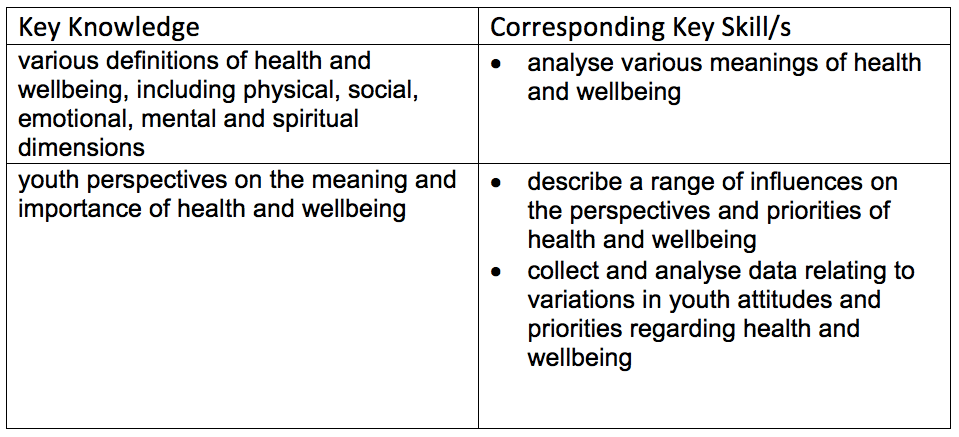
My Constructed Participatory Activity
- In small groups collect /take images from around campus that you believe depict various definitions of health and wellbeing, including physical, social, emotional, mental and spiritual dimensions to show a youth perspective on the meaning and importance of health and wellbeing.
- From these photographs as a group identify the dimension of health and wellbeing that you consider is under-represented within the school community. Discuss a range of influences on the perspectives of health and well-being priorities.
- Develop an intervention that showcases and promotes youths perspective and priorities on the health and wellbeing from this under-represented dimensions.
- Present these interventions/showcases to the class to highlight the various perspectives and definitions to health and wellbeing across the groups.
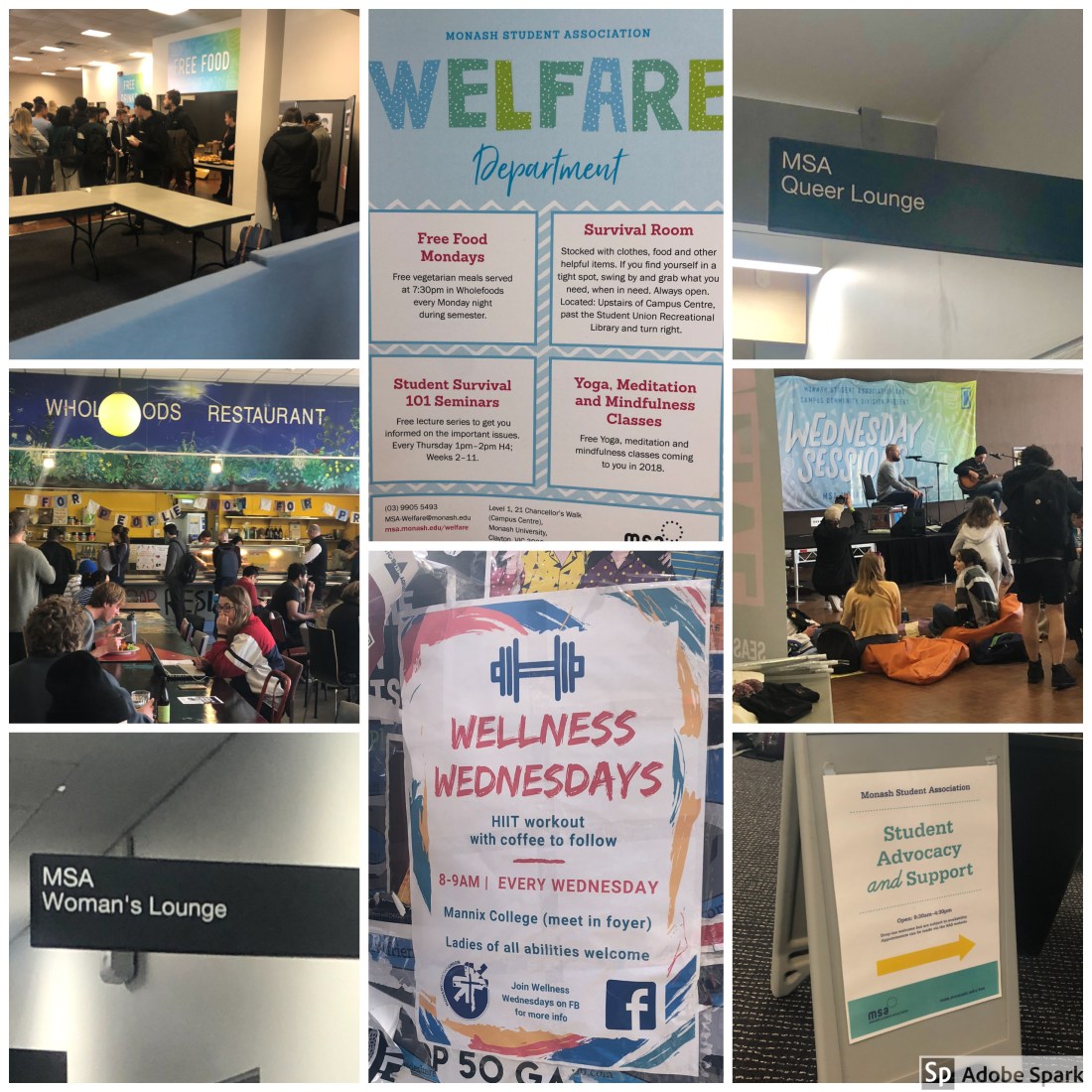
Applying Hart’s ladder to the learning activity
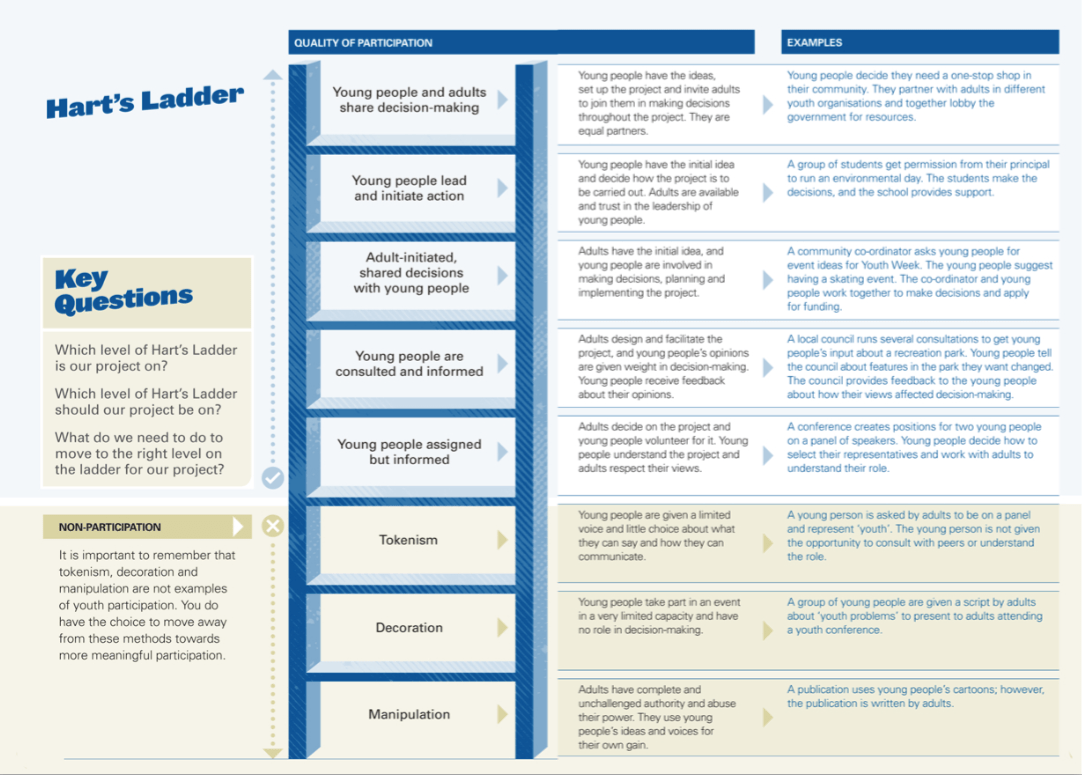
This activity ideally would target the top two levels of participation; completely student driven or youth adult equity. As these demonstrate the highest quality of student participation, where the students set up the intervention on health and wellbeing based on their own initial ideas. Realistically, considering the activity must be scaffolded to the curriculum, it is therefore not completely student driven as set guidelines and limitations regulate what the students can explore. These guidelines must be in place in order for the teacher to grade their work corresponding to the curriculum. Hence, due to deadlines and strict learning objectives participatory approaches are scarce in VCE. However with the correct scaffolding an effective participatory approach can still be implemented, albeit slightly lower than the top level of participation. Harts (2008) research implies that pedagogical processes that promote students partaking in hands-on experience in a health-promoting manner lead to progression of children’s knowledge, competence, and motivation in regards to the enhancement of one’s own health. In the activity above, genuine participation is sought-after, encouraging students to have greater responsibility in regards to the learning process (Hart, 2008). Thus keeping students engaged and motivated to acquire the knowledge and employ it in dynamic ways (Simovska, 2018).
Reference:
Simovska, V. (2012). Case study of a Participatory Health Promotion Intervention in School. Democracy in Education, 20 (1), 1-10.
Hart, R. A. (2008). Stepping back from ‘The ladder’: Refl ections on a model of participatory work with children. In Participation and learning (pp. 19-31). Springer, dordrecht.

 A Participatory Approach to Health Education